Search

Bo Sanders: Public Theology

updating & innovating for today

Category

supernatural

trying to making sense of the miraculous

This is a re-post from a blog that I did at Homebrewed Christianity. I wanted to display here in preparation for a series of upcoming posts.  [ I have started putting posts with big words over there and more everyday stuff over here – it seems to be working]  Thank you all for your great feedback and thoughts!

In his book Process Theology: a basic introduction , C. Robert Mesle says:

“the miracle of birth” is a wise phrase, pointing us toward a healthy theology of miracles. Birth is not supernatural. It involves no intervention violating natural processes. We know a tremendous amount about reproduction and may one day be able to create life in laboratories. Yet for all that, we still feel, and speak of, the miracle of birth…
Miracles become problems when we think of them as demonstrating divine power to intervene in the world however God wishes. The problems are not merely scientific, but also theological and moral. Nothing challenges the goodness of God or the justice of the universe more than the stark randomness of such alleged “miracles”.

That is an interesting way to think about the subject, but I want to make an important distinction between supernatural and miraculous.  The Miraculous can be seen several ways – as something that surprises us, outside our expectations; as something that is amazing; like the miracle of birth, something that is statistically improbable , like landing a Airplane on the Hudson River; or religiously as something that only divine help could account for.

There are several reasons why I think that this topic is SO important:
I can not tell you how often someone says something about how God directed them to take a specific road or a route that avoided an accident.

  • Did god tell everyone and they just were not listening?
  • Did god only tell those whom love god?
  • Does god monitor all traffic patters and why would god be so concerned with getting you  home on time but so unconcerned with children being abused and people going hungry?

People often get defensive and say “In a worship service I saw/experienced  _____. Are you trying to tell me that did not happen?”  No. I absolutely believe you that it happened. What I am saying is that maybe the explanation provided in the worship service was not the whole story of why the phenomenon happened (people being slain in the spirit, etc).
I want to be clear about something: I believe in prophetic words. I have told people things that I could not have known in my own power – including twice that I have described pictures that hang in their homes, homes that I had never been to.
I absolutely believe that the Lord could ‘lead’ you to call someone who needs a call ‘at that exact moment”.

So keep that in mind when I say that we need to revisit our frameworks around the miraculous and we definitely need to abandon the whole ‘super’ natural worldview. It does not hold together under even the slightest examination in the 21st century. Continue reading “trying to making sense of the miraculous”
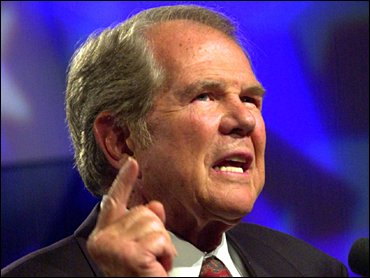
Pat Robertson makes me a better believer …

God told Pat Robertson who the next President of the United States will be.
You can watch it at Slate or read about in million other places.

Here is the thing: as much as people may want to make fun of the guy for being delusional I have to think that there may be something to be said for him.

If anyone follows my blogs either here or at Homebrewed Christianity then you know that I am a big proponent updating the faith. In fact, truth be told, I have written about it more than any other subject over the last 4 years.

I am especially interested in 3 updating things:

  • The way we read the Bible (hermeneutics)
  • The way we conceptualize the universe (cosmology)
  • The way we talk about miracles (metaphysics)

I have even gone so far lately as to publicly articulate why the miraculous is not super-natural and to research church history about eschatology (the end)… I have even shown concern about the evangelical icon Tebow [here].  All of that is to  say that I am not dabbling in this or being halfhearted… nor I am doing what so many that I know are and simply walking away from a faith that is not intellectually credible, scientifically accountable, or personally tenable. Continue reading “Pat Robertson makes me a better believer …”

No One is 1st Century these days

I have been having a great conversation with a good friend of mine named JD. I wanted put part of it up here in the hopes that others will be able to jump in.

Me: I keep saying: I have no interest in discounting or explaining away my Christian experience – but neither am I willing to be bound to the antiquated ways that it was talked about in the 1st centuries.
JD: Understood! But does that mean you also discount people that do follow the 1st century Christianity? Is there not a place for everyone to understand and follow God in his/her own way
Me: Good clarification! I certainly do want to be open – engage – interact with – and learn from people of all traditions, denominations, and sects.
The one thing that I am most concerned about is people who think that they have a 1st century perspective but … who have not accounted for the radical developments that have impacted their faith! I will give you three examples:
1) Individualism. 1st century folks would not have even thought in our terms. They were connected in community and family systems/structures that defined them. When they said “I” they did not mean what we mean when we say “I”.
2) Literacy: since the Gutenberg press we each have a Bible in our own hands. The Bible was never meant to be studied alone. It was a communal activity where is was primarily read out loud.
3) Science: our understanding of everything from the Universe to the human body (not to mention Facebook and the Internet) has profoundly changed the way that think about the world, interact with each others and interact with God. This can not be underestimated. Continue reading “No One is 1st Century these days”

A Progressive take on being Pentecostal (or Charismatic)

In a recent Homebrewed Christianity podcast episode Mike Morrell interviews Leif Hetland, a charismatic signs & wonders Pastor. Afterward I got to talk with Tripp about my thoughts on reconciling the best of Pentecostal practices with a Progressive Christianity.

Here are my two big points:

 What Pentecostals have to say to Progressives

Jesus laid hands on people, the Disciples laid hands on people and the letters of the New Testament tell us to lay our hands on people. If you have bought into a brand of Christianity that does not have you laying your hands of people and praying in expectation that something would happen – you may want to revisit the reasons why.

If your faith is primarily intellectual, abstract, and conceptual … it may not be the religion that the writers of the New Testament called us to. The early church was a hands on movement and prayed with expectation.

What Progressives have to say to Pentecostals

Being delivered from personal demons is great and praying over whole cities to break or bind the ‘strong man’ that holds people in bondage is fine. There is a vital missing element that needs to be added. Its not just about the personal (mini) and the heavenly (meta) – that leaves a gap that must be filled. In the middle is the address of systems, structures and institutions (what Walter Wink calls ‘The Powers the Be”).

If you faith is primarily personal-congregational and supernatural-heavenly, then you might want to revisit some understandings of Scripture and the address of systemic sins (like injustice).  Otherwise you are in danger of being so heavenly minded that you actually reinforce and empower that very structures that you say you are praying against.

The 21st Century

I think that it is important to have these two camps are in conversation. Continue reading “A Progressive take on being Pentecostal (or Charismatic)”

Signs that make you Wonder

Let me just say how much I have enjoyed the conversation this week. One of the dynamic elements of a conversational blog is that sometimes that conversation takes longer or goes in a different direction than expected – this is the nature of dialogue (vs. a monologue). I was supposed to write on allegory today but that can wait till Friday – today we get talk about miracles, the supernatural and signs that make you wonder.

It seems to me that there are two main things to get on the table here.

The first is the phrase ‘super-natural’ comes from specific worldview that came to ascendancy in the seventeenth century. It is very mechanistic. It says that God set up the natural world to work a certain way (like a clock) and the debate was really between folks like the Deists who said the God stepped away after creation and is letting it run like clockwork. The other group believed in intervention and held that God did – from time to time – interfere with the normal mechanisms and do something … super-natural. The activities of angels and demons were outside the perceptibility and predictability of the ‘natural order’ and so on.

That is the supernatural and that is exactly what I do not believe in.

Now, I do believe in the miraculous. The miraculous in this sense is that which is extra-ordinary, outside the expected normality of human experience. Since I am a believer, I attribute that to the power of God who is at work in the world in Holy Spirit.

I want to say again that I do not believe in a solely transcendent God who in ‘his’ holiness can have nothing do with fallen matter and thus resides ‘up’ in the heavens and intermittently ‘breaks through’ the veil of reality in order to intervene in human affairs.

The second thing that we need to get on the table is Biblical language repeated so often in the Gospels of “signs”. What we calls miracles are often referred to as signs. I have even heard them called ‘signs that make you wonder’. This is sacramental language – which is why so many of us are not familiar with it.

A sign, by being fully itself, points to something that is beyond itself. Think of a road sign. A symbol, similarly, is something that participates in that which it signifies without being totally that thing. So in communion, we might say that the bread points to the body of Christ while remaining fully bread. Or that the church is not the Kingdom of God even though it participates in the it. It is a sign that points to a greater reality.

What we would call miracles, what the Gospels often refer to as signs, are activities of God’s presence that point to something beyond themselves while – or by – being fully themselves.

Once these two understandings are in place the conversation takes on a whole new set of possibilities. Once you say goodbye to predictable formulas (mechanistic) then you can move to a conception of a dynamic relationship with a living God. Once you move away from a super-natural mentality (which is often superstitious), you can move to a sacramental participation with the natural world.

God is at work in the world. As Christians we say this proudly and confidently. (I understand those in the Enlightenment who rejected the interventionist view of god and who explained away the miracles in the Bible by simply saying that ancient pre-modern people only interpreted things that way – but that is not where I am at).

If you are into Process Theology, there is a whole second conversation that takes you into all sorts of fun places!  But today I just want to point people to Chapter 7 in the Secret Message of Jesus by Brian McLaren called “the Demonstration of the Message”.  It is wonderful.  I will close here with the words he closes with there.

… this is in large part what I believe the signs and wonders of Jesus are secretly telling us: that God, the good King, is present – working from the inside. The King is in the kingdom, and the kingdom is among us here and now – for those who have eyes to see and ears to hear. The King is present in the mess and chaos of everyday life on earth, bringing healing, sight, perception, liberation… The incursion of the kingdom of God has begun. We are under a gentle, compassionate assault by a kingdom of peace and healing and forgiveness and life.

Relational Religion” src=”https://bosanders.com/wp-content/uploads/2010/11/citysoleilblueboat_4.jpg?w=150″ alt=”” width=”150″ height=”100″ />

a Better way to read the Bible?

A better way to read (read) Admittedly, this is not how I learned to read the Bible. In fact, I’m not sure that I learned to read the Bible at all. I just read it. I read it like you would read anything else. I just read it and took it at it’s word. It was there in black and white.

However, there were some things about the Bible that made it different than everything else I read: it didn’t have a single author (or even a stated author for many of it’s ‘books’), it was written thousands of years earlier, and it was not written in English – it was translated.

None of that is a problem necessarily. I still got the main point of the book (I think) and was able to pick up on most of its important themes (at least they were important to me). In fact, the more general my reading and the more generic my intent, the better that way of reading works.

The problem comes when you want to either make bigger and broader claims bases on Scripture or the more narrow and specific you want to get.

For instance, if you want to make a big claim about how the universe works or the fate of every human soul throughout history, you end up doing something with the text that it may be unsustainable under further review. If you want to get specific and say that this word in the original text says ____ and therefore women can not ______ , or ministers must ______ … using the text that way may become an issue.

I put forward an idea in my previous post that gives us permission to update, revisit, and re-engage the texts of scripture based on two things:

  1. we do not have a pre-modern mind and therefore have a very different relationship to story, text, idea, and experience than people of the pre-modern world.
  2. we live in a world that is so different, has changed so much, has gone through such radical and traumatic experiences that we would be blind not to acknowledge and account for it.

In my clearest language: I am advocating for a more sophisticated way of reading the Bible and to move away from a simple reading. Like I said at the beginning, I was not taught to read the Bible, I just read it – or so I thought. I had to get rid of the illusion that I was ONLY reading. It is a simply awakening and only requires one thing to get started! You must admit that you are translating when you read. You are not simply reading , you are doing something else – even if it subconsciously  or unknowingly. There is a hermeneutic (way of reading) that is being employed by all of us and we have to come to terms with the idea that our way of reading is not (and can not be) the same way of reading as the ancients did.

Here are four advantages to awakening to the presence of interpretation:

  • We can read the creation stories in Genesis and call God ‘creator’ without discounting or disregarding contemporary science (and especially emergence theory).
  • We can take the story of Jonah or Job and recognize that they are more like movie scripts or plays than they are newspaper reports and not get bogged down in the details.
  • We can believe that the incarnate Jesus calmed a storm (the miraculous) without making the leap that God sent Hurricane Irene or directs tornadoes.
  • We can see that the Book of Revelation is a political commentary (prophetic imagination) about the first century C.E.  and not an exacting prediction about the end of the world.

I believe this to be a better way to read the Bible. It is both more authentic to the text and has more integrity in the world that has developed since the text was written. We are not limited to only the physics and metaphysics of antiquity but we also are not abandoning the whole project and going out on our own. We are providing continuity with the historic trajectory and honoring the tradition.

You can call this a ‘new kind of christianity‘ if you want, or something else, but it is a way a being in the world that honors Christ and engages the world as it actually is. It allows us to believe in miracles without being superstitiously ‘super’natural.  It lets us listen to the wisdom of the ancients without being stuck to their ‘three-tiered’ universe. It provides a dynamic engagement between the classic themes and the world we find ourselves in.

Earthquakes Hurricanes and Politics

Earlier this week, Michelle Bachmann said something stupidor at least something that I regarded as such.  Later she said she was just joking. I posted it on Facebook and some people actually tried to defend her thinking that ‘god’ caused the earthquake and hurricane.

I have written before about how God does not direct tornadoes or punish the people of Haiti for some deal their ancestors made with the devil. I have said that Crucifying Job’s God” href=”https://bosanders.wordpress.com/2011/01/11/crucifying-jobs-god/” target=”_blank”>we need to update our concepts and adapt our frameworks (theological, philosophical, sociological, spiritual, etc.) to the realities of the 21st Century and not allow ourselves to get limited by what the ancients believed/understood in the first couple of centuries C.E.

What follows is an amalgamation of my comments in that Facebook conversation. I have modified some of them to account for responses by those in the conversation.

When I say that God did not cause these things, I am talking about  intervention, ‘an act of God’.
Do you believe that God intervened in the natural order to make the earthquake and the hurricane? Did God cause them as part of ‘his’ plan?

I do not.  But I also understand that those who want to believe like Bachmann that god does work this way and that scripture does not allow us to think otherwise … is certainly is one way to be a Christian. – a way I think made a lot more sense in the pre-modern world… but it is one way to be a christian.

That being said, it is not the way that I am looking for. I do not want to be limited to only the physics and meta-physics of the first centuries C.E. As christians, I want to incorporate modern realities, acknowledge scientific advancement and adjust to expanding knowledge. I want to grow up out of humanity’s infancy. This means we adapt and integrate to leave behind some of the previous ways of thinking.
Christianity is a perpetual maturing toward reality and moving from milk to meat.

In this rubric, the Bible is an inspired and authoritative record of God’s dealings with a part of humanity as interpreted and then represented by those individuals and communities in their understanding and capacity.

This is where ‘all or nothing’ thinking really fails us. I’m not saying to  “throw out” the teachings or worldview of those who wrote the Bible. I am saying that we need to integrate. You have to have something old to integrate the new into. Otherwise it is replacement. I just don’t want to be limited ONLY to first century meta-physics. I obviously don’t want to chuck everything Paul said.

Here is why this is so important: part of the good news that the church has to proclaim is that the world is God’s and that God by God’s spirit is present at at work in the world!!
My hesitation here is what you mean by ‘in charge’ because God is not an Caesar-Emperor with ‘thumbs up- thumbs down power’.

  • that conception of god is to miss that counter-narrative provided by Jesus. God is NOT like Caesar. Jesus shows us something different – that God is NOT like the powers of this world.
  • those who miss this counter-narrative, often also miss that the God revealed in Christ is at work in Holy Spirit at this is why we must be Spirit Christians and not Old Covenant Christians just getting out frameworks and word pictures from the days of Kings. Jesus provides a revision to that understanding and a counter trajectory to simply sticking with that previous understanding.

When we say that it is time to update some things we are NOT saying that the ancients knew nothing about physics or metaphysics. Let’s say that they were exactly as proficient in their day as we are in ours. That is all we can do – do the best we can do in our time as they did in theirs.

What I am 100% against is saying that they knew MORE than us and we need to stick with ONLY what they knew!

There is no other area other area of our life where we stick with the knowledge of the 1st century.


I wanted to add a link to “making sense of the miraculous” for those who are interested

The work of God’s Spirit

This was a post on a blog from earlier this week: Hey Bo!

First, in what ways have you changed the WAY you talk about the Spirit’s work in light of “the 21st century update”? Examples?

Secondly, in what ways do you talk about the Spirit’s work SPECIFICALLY in order for it to be a “subversive danger to the systems of this world” or are these two questions one and the same?

I’d be curious to hear more!

This blog looks great. I, for one, and much more likely to hit it up now that it’s all in one place. It’s a very human thing, but it’s true that we are quite lazy, even in web-browsing! Can’t wait for the return of the POD!

I started to respond but realized that it was far too big a topic for a little reply so it morphed into a whole new post:

There are three big changes:

  1. I got rid of Dualism (like my understanding of  Transcendent and Immanent) that were both unhelpful and antiquated. I had been sold a bad (simplistic) understanding called the 3 tiered universe.  This change is essential to understanding WHAT is happening.
  2. I brought in an understanding of the Trinity called Perichoresis (or Circuminsession) that speaks of HOW it works.
  3. I have adopted a “relational” model (process) that explains WHY the Spirit’s work looks the way it does.

These three changes have revolutionized both my understanding and my practice.

I will give you an example: at church we often open a service by praying and asking God to “come” and we sing songs about the spirit/grace/power/rain coming “down”. We talk about God breaking “in” or breaking “through”.

Now I understand that this is all just language (theo-poetics) that comes from our PERCEPTIONS. That is fine. But God has already come “down” and is already “in”, God has “come” and IS at work among us.  So I don’t get caught up on the imagery – I understand that it is just how we imagine it.

This has then freed me up to stop looking at things in ‘kind’ and see them in ‘degree’. Continue reading “The work of God’s Spirit”

Healing, Nature, Miracles, Prayer and Medicine

> I am at the end of my school year and, thus, writing papers. Here is an email conversation from a couple of weeks ago I had with a fellow minister. I wanted to post it and see if anyone had any reflections, objections, questions or comments.

If you already know the basics or have A.D.D. – just jump down to the sentence in orange and start there.

I will put JD’s thoughts in bold green and my responses will follow.

JD: Two thoughts on healing, medicine, and health care:

  • Our lack of theology of creation results in average people pushing against both modern medicine and many forms of holistic/folk medicine.
  • Many people are fearful of holistic medicines because of non-Christian spiritual components.

Me: I’m just going to throw out some ideas:
1) Creation was not ONE week a long long time ago. Creation is still happening. Look at the Hawaiian islands. Look at the tectonic plates that cause tsunamis.
This is ongoing creation.

2) In scripture God works through nature almost all the time. Burning bushes , winds on the sea of Reeds (Red Sea), clouds by day – fire by night… walking on water (the sea was Chaos in the 1st century) calming the storm, Sky turns dark, etc. This is Biblical.

3) The old saying is that there is no use praying for the cool of Spring in the heat of Summer. The seasons will be.
Continue reading “Healing, Nature, Miracles, Prayer and Medicine”

Create a free website or blog at WordPress.com.

Up ↑