Search

Bo Sanders: Public Theology

updating & innovating for today

Category

Uncategorized

Christianism: Dangers of Frankenstein Christianity

When Sarah Palin said that water-boarding was how we baptized terrorist, it was a turning point for my understanding of faith and the role it plays in our culture. I don’t know if I was more offended because of my hatred of torture (or ‘enhanced-interrogation techniques’) or my love of baptism and what it represents as a central expression of the faith. Baptism is how we who believe demonstrate that we accept the death-to-self and enter into the life-of-Christ.

I had been asking this question ever since Rumsfeld/Cheney put Bible verses on the covers of their Iraq war briefings to President Bush. That is how I learned about things like ‘master signifiers’, which are symbols such as ‘Christianity’ that have become detached from the meaning that they were originally anchored to. They are un-tethered from the history that originally gave them meaning.

Christianism is disconnected from the faith and tradition that gave it birth. When you see or hear something under the banner of ‘Christian’ that does not seem to reflect the example of Jesus or the teaching of Christ … you may have wandered into the wilderness of Christianism. It uses all the same words that you know … but in foreign and contradictory ways.

Christianism is several degrees removed from the teaching and example of Jesus. It begins in the formation/formalizing of those things (one degree) – then it takes on an authoritarian/hierarchical structure (two degrees) – then, and this is the big one, it is married to power (government/military) so now we are three degrees from the origin. This new orientation becomes solidified/codified as a thing that has its own identity: “Christian” becomes a category by which you can know who is in and who is out – the saved and the lost (fourth degree). This is where bad things done by ‘good people’ can be justified as being beneficial to ‘the cause’ or ‘our side’.

The final stage is when ‘Christian’ is an identity that helps to distinguish us (in-group) from others, NOT depending on ones obedience to the central tenants, following the teachings of the founders, or even knowledge of the distinctions that signify identity to the group. At this point the signifier ‘Christian’ is no longer anchored to anything that it was originally grounded in and no longer connected to the very thing that gave it life and health. ‘Christian’ becomes a floating signifier and is un-tethered from its proverbial mooring (fifth degree).

 We are watching a ‘historical drift’. This is how Sarah Palin can say that water-boarding is how we baptize terrorist. This one statement has it all! We are the in-group. We do this to people with unilateral/coercive power. It is then connected to sacred/holy acts. And finally, we assume that we are doing God’s work when we do things that are opposite/counter to the example of what we say is the incarnation/revelation of our very God.

When something is this far (5 degrees) away from its original intent, folks can start to ask, “how is this connected to that?” The generous/gracious response is ‘loosely’. The concerned response is ‘they are not connected’. The critical response is ‘it is counter to the origin’.

When you add an ‘ism’ to anything it is in danger of becoming a Frankenstein creature that takes on a monstrous life of its own. Examples of this in the U.S. context involve:

  • Democrat-ism: When it is no longer about the democracy but has become about beating the ‘other side’.
  • Republican-ism: When it is no longer about the republic but had been reduced to gun ownership and ‘states rights’.
  • Methodism: When members of Methodist churches can no longer tell you what the ‘methods’ are.
  • Evangelicalism: When those who identify as such cannot tell you what the evangelion is or cannot articulate the ‘good news’ of Jesus’ message.
  • Pentecostalism: When the gift of tongues is no longer about proclamation to those who speak in foreign languages but is about an ‘unknown’ prayer language that edifies the speaker.

These have all become master signifiers that identify an in/out boundary but which no longer re-present the original meaning they once stood for. Our world is full of markers/groups/identities/labels that are so far from what they originally meant that they are not longer tied (tethered) to the thing that used to anchor them.

My concern is that ‘Christian’ no longer signifies one who follows Christ and has instead become an ‘ism’ that designates an us/them distinction that has nothing to do with the teachings or model of Jesus. I get why people are being inventive and using ‘Christ-follower’ or attempting to follow ‘the way of Jesus’. Cynics will mock all they want, but if these innovative monikers are an attempt to protest or defy the ‘ism’ of the dominant expression … I say we ask more questions instead of making snarky and dismissive comments.

They might be onto something.


 Interesting uses of Christianism started appearing between 2003-2005

 https://en.wikipedia.org/wiki/Christianism

 http://tcpc.blogs.com/better/2005/05/christianity_or.html


If Just One Book …

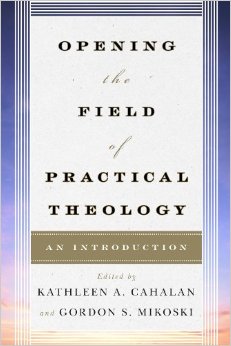
I read a lot books in the past year. If I was only allowed to keep one of those books going forward, there is no doubt which one it would be. Opening the Field of Practical Theology: an Introduction edited by Kathleen Cahalan and Gordon Mikoski is comprehensive and innovative. It address historic developments, contemporary concerns and even deals with the overwhelming whiteness of the field in a constructive way.

I use Bonnie Miller-MacLemore’s fourfold definition of Practical Theology to address the multifaceted nature of what has become the field:

  1. An activity of believers seeking to sustain a life of reflective faith in the everyday.
  2. A method or way of analyzing theology in practice used by religious leaders and by teachers and students across the theological curriculum,
  3. A curricular area in theological education focused on ministerial practice and sub-specialties.
  4. An academic discipline pursued by a smaller subset of scholars to support and sustain these first three enterprises.

In Opening the Field, Richard Osmer address this complex landscape by outlining/mapping four ‘streams’ that are found within the field – including representative figures illustrating the different approaches/concerns. The four streams are:

  1. the Hermeneutical trajectory
  2. the Transforming Praxis trajectory
  3. the Neo-Aristotelian trajectory
  4. the Confessional trajectory.

Osmer explains that these trajectories work like paradigms in Thomas Kuhn’s sense and that each works “with a very different orientation toward the empirical and human experience.” Continue reading “If Just One Book …”

I Passed My Qual Exams!

I am so grateful to be able to announce that I have passes my qualifying exams and am officially ABD as they say (all but dissertation). This has been an incredible journey and this last year has really challenged me in new ways. I have learned some valuable lessons along the way.

I also wanted to let you know that I will be returning to the blogosphere – but with a little twist. I’m going to be shifting my emphasis from ‘navigating between the everyday and theology’ to a ‘public theology’. David Tracy talked about theology having three publics: the church, the academy, and the culture. I am going to experiment with rotating between these 3 areas of focus and labeling each post accordingly.

I think that this rotation will add an interesting texture to the conversation here. I am excited to be back and look forward to returning to a dialogue that I have missed greatly.

-Bo Sanders

I totally get the Trump thing

I totally get the Trump thing.

Several years ago I read a book about people’s frustration with Washington and politics in general. The guy who wrote it is further out than Bernie Sanders. His name is Chris Hedges and the book is called ‘The Death of the Liberal Class’. It is an autopsy on our broken American system that explored the discouragement, anger and alienation that so many feel.

The past decade of congressional gridlock, filibusters over the debt ceiling, threats to shutdown the government and the citizen’s united ruling/’corporations are people’ debacle has been enough to discourage even someone like me who is only marginally political.

I have watch with great discomfort as the Tea Party has emerged chanting ‘we want our country back’ and I have been forced to learn what gerrymandering is. I get agitated when voting rights a repealed and am horrified when birther conspiracies and anti-Muslim sentiments are loudly broadcast.

I was one of those snobby-onlookers who chuckled at Trump’s opening escalator decent to his announcement with its Toby Keith style rhetoric and actors hired to fill out the ‘crowd’. It was not long before I came to realize that this was not your regular publicity stunt. There was something different about this one – even from the bombastic and inflammatory style of precursors like Ted Cruz, Michele Bachmann and Sarah Palin.

Keep in mind that on a good day I have to be careful not to pull a muscle rolling my eyes at staged theatrics and choreographed spectacle. I don’t have cable. I refuse to watch ‘reality TV’. I buy my organic-free range groceries at Sprouts. I bike to work most days. I brag about how long it has been since I shopped at Wal-Mart or ate at McDonalds. I listen to Democracy Now as I brew my single-region fair-trade coffee in a french-press.

I’m that guy.

I am also a public theologian with a propensity toward cultural criticism however. Last week I posted a 10 min video where I proposed that we live up against the end. I don’t mean ‘the end of the world’ or the End Times in a Left-Behind rapturous sort of way. I mean the end of this current configuration.

We are up against the end of some significant categories:

  • Economy – global markets and unregulated capitalism.
  • Political – democracy in both domestic and foreign policy manifestations.
  • War – the ‘wars’ on terror, drugs and Christmas are but 3 examples of the fallacy of misplaced concreteness.
  • Environment – Views of natural ‘resources’ of the earth impact both water and air.
  • Media – Movies, music, TV, art and internet can be weapons of mass-distraction at best and empty repetitions of imitation and stimulation (simulacra) at worst.

It is no surprise to me that we are in the moment of Trump. He is the perfect fusion of 3 significant areas: politics, economy, and entertainment. He is a billionaire media-personality who is largely funding his own campaign as an irreverent trash-talking outsider.

That equation makes perfect sense to me. It terrifies me but at least the trajectory lines up!

Take equal parts reality TV, Palin/Tea Party, Citizens United, anti-Obama backlash and the war on terror … stir it up and pour it over a healthy dose of frustration about ‘political correctness’ (aka being able to say what you want about people of other religions, races or sexualities) and serve it hot.

If you are interested in talking about a spent society and our cultural exhaustion, I would encourage you to watch the 10 min video and let me know what you think.

Seen through this lens, the Trump phenomenon makes total sense. He is not a ‘sign of the end’ but just one prominent symptom of a sickness hanging in the air.

the end


Echo of the End

We live up against The End. Not the end of the world or the End Times … just The End. The economy (capitalism), democracy, media and war are now empty echos of former expressions.
The church is always trying to reform, revive and redeem an echo of an ancient broadcast.
The current configuration is insufficient for the contemporary situation.

Here is 10 min video introduction – an Invitation to Innovation

Fake/Real part 1

In my studies I have found an amazing line of concern/critique of our media saturated consumer society. In the coming months I will be talking about some of the implications for the spiritual life of our faith communities.

In this video I introduce some of the ideas and frameworks that will punctuate this theme. I am also employing this theme for the conversations at the church I help facilitate (the Loft LA) in our Sunday gatherings this month.

Let me know what you think or any additional topics you would like to address.

__________

Just in case you are interested, here is a short invitation to the series (on Vimeo)

Image Is Everything from Bo Sanders on Vimeo.

3rd Way not Middle Way: bust the binary

Dualism offers us binary options that must be challenged. Evolution & Creation, Male & Female, Church & World, Jihad & McWorld, East & West, Think & Do etc.
This short video is in response to requests for alternatives to the either/or frame work that we have inherited.

Church Present and (near) Future

In this short video I speculate about some trends of the N. American church. I would love to hear your feedback and if you want any of the concepts expanded upon.

This is a summary of a multi-day presentation.

There is no Kingdom of God

The ‘Kingdom of God’ is a bad translation of the Greek basileia tou Theou. It comes with too much baggage and not enough emphasis on the counter narrative embedded in the phrase.

Jesus’ kin-dom is both ‘not of this world’ and completely un-like the kingdoms of this world.flamine sword

I look forward to your comments, questions and concerns.

Blog at WordPress.com.

Up ↑