Search

Bo Sanders: Public Theology

updating & innovating for today

Tag

bible

a 3rd way to read the Bible?

In an ongoing search for a hermeneutical practice that is both healthy and accountable (meaning lifegiving without being merely devotional and scholarly without being dry) I have written quite a bit about the journey. I had a multi-part post a while back  Part 1    Part 3 as well Moving Mountains Signs that make you Wonde

This is last week’s addition (posted at HBC) and it was so well received (by some) that I wanted to A) post it here to continue that conversation and B) will be working on another series for late March.  This clearly is something that matters to people.

I love reading the Bible. I grew up reading it, I am passionate about studying it, and delight to preach from it whenever I get the chance.
I also recognize that it is getting harder to do in our contemporary context. I am a loud critic of simple dualism (constantly contending with my Evangelical associates)  – but even I must concede when there are two main schools of thought that have set themselves up in opposition to each other.  I buck the ‘spectrum’ thinking like Liberal v. Conservative (as if those were the only two options) in almost every circumstance. However, when it comes to reading the Bible, it is tough to avoid the set of major trenches that have been dug on either side of this narrow road.
The first group reads the Bible in what is called a ‘straight forward’ way and while they spend a lot of time with the text, there is little acknowledgement of what is going on behind the text. This group reads the Bible primarily devotionally, preaches exegetically and views it as not just instructive but binding for all times and places.
In my interactions with this group, there is little awareness of hermeneutics (in may cases they may have never heard the word before) and even less willingness to engage in scholarship that does anything behind the text.
The second group engages in Historical-Critical methods. They are willing to look at things like redaction (later editing). They don’t harmonize the Gospels into one Gospel. They are willing to acknowledge that Matthew and Luke’s conception, birth and subsequent details do not line up. They understand that while the story of Daniel happens in the 5th century BC – it was not written in the 5th century BC. They joke about Moses writing the 1st five books of Bible (how did he write about his own death?).
 Lately I have been engaging books like :

  • How to Read the Bible: A Guide to Scripture, Then and Now by James L. Kugel
  • To Each Its Own Meaning, Revised and Expanded: An Introduction to Biblical Criticisms and Their Application by Stephen R. Haynes
  • Whose Bible Is It? A History of the Scriptures Through the Ages by Jaroslav Pelikan
  • She Who Is: The Mystery of God in Feminist Theological Discourse by Elizabeth A. Johnson
  • Sexism and God Talk: Toward a Feminist Theology by Rosemary Radford Ruether

Over the last 4 years, it has become painfully clear to me that we have a problem when it comes to reading the Bible. Simply stated, those who spend the most time with the Bible know less about it but make greater claims for it than those who do more scholarship on it but may have little faith in it.
I was listening to a seminar on the Historical-Jesus and talking to several friends of mine who do Historical-Criticism, here are 3 sentences that no evangelical I know even have ears to hear:

  1. Paul didn’t even write that letter
  2. Jesus probably didn’t say that sentence
  3. The Bible is wrong about this

I get in trouble for saying much much milder things about the literary device of the virgin birth, the prophetic concern of Revelation which is limited to the first 2 centuries CE, and  Jesus being ironic about ‘bringing a sword’. Can you imagine what would happen if I thought that Paul didn’t write the letters that are attributed to him, that Jesus did not utter the red-letter words we have recorded in the gospels or that the Bible was wrong about something?  I can’t.
So how does a moderate engage Biblical scholarship without stumbling over Historical-Critical pitfalls and Historical Jesus land-mines?  The thing that I hear over and over is

“Just stick with N.T. Wright. He has navigated the gulf for you”

Now, I love N.T. Wright as much as the next emergent evangelical (especially his Everybody series) … but I am as unwilling, on one hand, to forego the best and most comprehensive stuff (like Dom Crossan’s work on Empire) as I am, on the other hand, to subscribe to the inane prerequisites of the Jesus Seminar.

What I would really like to see is a move within the emerging generation that is tenacious about engaging contemporary scholarship while fully embracing the kind of devotional passion that the innerant camp demonstrates  – all the while avoiding the fearful and intimidating chokehold that camp utilizes to squelch innovation & thought.
I want the next generation to both find life and direction in the scriptures and also to not have to read the tough parts with their fingers crossed behind their back.
a hopeful moderate – Rev. Bo C. Sanders

For those who do not want to scour the comments to find the links to other resources:
Daniel Kirk’s book  “Jesus have I loved but Paul?”
Ben Witherington’s  book list 

God as She-He-They

Originally posted at Homebrewed Christianity as “She Who is Not”

Earlier this week I had a post about language and God talk that incorporated C.S. Lewis’ poem “A Footnote on All Prayers”.  Part of what came out of that was an exchange with J.W. about pronouns, the Bible, and Inspiration. I wanted to transfer some of that over here (I have edited it for clarity) in order to open up the conversation to more people.

J.W.: So, what does your god look like? And how is that look any different from Piper’s or Driscoll’s?

Me:
Thanks for asking! Actually there is quite a substantial difference. Let me point out just a couple of things to start:
A) I don’t believe that language about God is univocal (as I have said). SO we begin in humility understanding that all our words, metaphors and concepts are OUR best attempt.
B) I believe that langue (since it is not univocal) functions relationally. When Jesus uses ‘Father’ language, he is talking about the WAY in which relates to a father. Not that God’s ontological being is Father in an exacting and representative way. It is an expressive use of language. That is the nature of language.
C) The way that Scripture is expressed is historic. I believe that the Bible is Inspired by Holy Spirit. That means that Holy Spirit was at work in the authors and ultimately in those who collected and validated the canon. (I confess this by faith). Those authors were historically situated and particularly located. They expressed their thoughts in their best language in their best frameworks. We see that historical locatedness and account for it when we engage their writings.
D) Whether you call it ‘original sin’ (I don’t) or ‘human nature’ or (my favorite) relational brokeness and conflicting biological impulses … humans have a problem. We are not 100% whole. Something is wrong (we don’t even do the good we WANT to do). That means that in every epoch and era there are things in place that are not perfect. Those show up in scripture – since it is a snap shot of its environment. The Bible is fully human (and I believe fully divine in a Process sense) but it is not ABSENT of humanity. It is full of humanity.
So If you take just those 4 things in contrast to Piper and Driscoll, then my God talk is:

  • in Humility not certainty or pushy
  • Relational not static or exacting
  • Historical not trans-historic
  • Human not un-human

Does that help? SO that is my starting point. From there I diverge wildly from the other two.

J.W.
Well, first of all, thanks for a response.
Second, no offense, but you use an awful lot of words to not say too much. Or, to say the same thing over and over while denying that you are saying one thing, yet actually affirming another. Since I don’t have any real idea what you believe Piper and Driscoll believe, I still don’t know that you are painting a different god or not.
You start out saying that all expressions of God are only a best attempt, but then you claim to believe the inspiration of the Holy Spirit. So, which is it? Our best attempt, or Holy Spirit inspired? See the problem there. It’s either one or the other, can’t be both.
Certainly the Bible is written situationally. God could have inspired men to write it so it only made sense at one point in the entire course of time, or He could have inspired it so that it meant the same thing from beginning to end, from the beginning of time to the end of time. And written so that ordinary people could figure it out with a little help from His Holy Spirit. Which is what I believe. You seem to believe that only post-modern thought with a lot of help from certain philosophers can figure out this whole humility, relation, human thing. Sorry, way too many creeks have flowed over their banks throughout history for me to believe that only recently have we been smart enough to figure this whole mess out.
God (Holy Spirit) inspired the whole Bible. He could have very easily caused His writers to use words that wouldn’t mean anything to their (at the time, current) readers, but would only matter eons later. IF that is what He intended.
Again, you haven’t showed me anything but dichotomies, and nothing of substance that disproves anything Piper et al believe-which I still don’t know what you believe they believe.

Me:
1) I did use a lot of words, but it was to say quite a bit. Unfortunately it was not what you were looking for so you think I didn’t say much. I assure you that I say quite enough in my 300 words to get in a lot of trouble in many circles!
2) You are 100% wrong that “It’s either one or the other, can’t be both.” Inspiration is not the OVERriding of human intent – it is the filling UP and expanding of human intent. Inspiration does not make something inhuman. You are thinking of something else not inspiration. Then you accuse me of dichotomies? Weird. I am talking about a participatory-relational model that transcends either/or thinking. You must be confused.
3) Here is an example of the difference (which you apparently were not able to pick up on): It is equally a valid to call god She as it is to call god He. Because in the end, god is neither. Those are pronouns that stand in for their antecedent but which do not entirely explain god or contain god’s ontological reality. God did not give Christianity a masculine feel. We did. God is God that is beyond our biological categorizations and anatomical classification. God is not defined by those – we simply conceptualize God and these terms and portray those conceptions in our language.
This is the nature of language. It is symbolic – analogical – and metaphorical.  That does not mean that we are not saying anything when we talk about God. We are. It does not mean that there is no inspiration. There is. Those are not mutually exclusive.
To quote Elizabeth Johnson in She Who Is :

Words about God are cultural creatures, intwined with the mores and adventures of the faith community that uses them. As cultures shift, so too does the specificity of God-talk.

To call God She is just as accurate and as inaccurate as calling God ‘he’.


Language, God Talk, and Prayer

I never struggle to believe in God. I believe in the deep core of my being. I have faith in my bones. I breath this stuff. I am filled with Holy Spirit and that gives purpose to my day and direction to my life.  I never doubt the reality of the Christian faith … until I listen to a conservative like John Piper or Marc Driscoll talk. Then, it is all too apparent to me that we are (at least partially) projecting our greatest hopes and dreams onto the screen of the heavens. We are outsourcing our fears and evils onto a cosmic bad guy called the devil. We have created a galactic father figure in the sky (paging Dr. Freud).

It is so clear when Piper talks that it makes me want to retreat into the post-liberal work of George Lindbeck!  

Xenophanes is famed to have said:

“If oxen and horses and lions had hands and were able to draw with their hands and do the same things as men, horses would draw the shapes of gods to look like horses and oxen would draw them to look like oxen, and each would make the gods bodies have the same shape as they themselves had.”

It gets boiled down to “If horses had gods – they would look like horses.”

Most days I can stave that off. I can avoid the haunting suspicion and nagging doubt … but what Piper does is create a God in his own image – there is no other way to say it – it is idolatry.

So what? you may ask. Why even bother with it?  Because, I believe that there really is a God.

C.S. Lewis wrote a poem one time called “a footnote to all prayers” (it references Pheidias who was  a legendary statue maker in the ancient world)

Footnote to All Prayers
He whom I bow to only knows to whom I bow
When I attempt the ineffable Name, murmuring Thou,
And dream of Pheidian fancies and embrace in heart
Symbols (I know) which cannot be the thing Thou art.
Thus always, taken at their word, all prayers blaspheme
Worshipping with frail images a folk-lore dream,
And all men in their praying, self-deceived, address
The coinage of their own unquiet thoughts, unless
Thou in magnetic mercy to Thyself divert
Our arrows, aimed unskilfully, beyond desert;
And all men are idolators, crying unheard
To a deaf idol, if Thou take them at their word.
Take not, O Lord, our literal sense. Lord, in thy great
Unbroken speech our limping metaphor translate.

This is why we must acknowledge what it is we are doing when we pray, when we preach, and when we practice. We are doing the best we can with words, symbols, sounds and images. But if those images are solidified and codified past their point of original artistry, mysticism and metaphor – then it becomes something deadly to the soul and dangerous to the one seeking the real and living God revealed in Christ.

Clarifying the Quad

a quick follow up to the post from last week
– both of which were also posted at Homebrewed

 I wanted to thank everyone who gave feedback on the Four Locations of Theology in the 21st century post from earlier this week. I appreciate the comments here, on facebook, and the emails.  It has given me a lot to think about and I wanted to clarify three themes that have emerged.

Three clarifications:

  • Reason seems to be the suspicious quadrant. Every time I bring up quadrilateral, more than half of the conversation will be centered on reason. This week was no exception. Reason draws the most concern – which is funny to me because tradition is the one that I find most suspect.

Here is the thing I would want to clarify: the other 3 themes of Scripture, Tradition and Experience all have reason woven into them. Those who wrote the scriptures, those who established the tradition and even our won experience are all saturated with reason. It is inescapable. The scriptures did not fall from the sky! They passed through the author’s minds and were processed with reason. Same with tradition. The creeds were not divined in some sort of supernatural ceremony. The were constructed and reasoned. Our experiences are interpreted utilizing our filters, frameworks and lenses.

 It seems important then to clarify that those three are not independent of reason but are dynamically intertwined with it. It would be useless to take out reason (as some have suggested) because it interlinked and inescapable.

  •  It may be that the quad needs something else. Some suggested replacing one of the 4 elements with an alternative. My favorite idea came from my friend Raphael who said

 “I suggest we add a fifth source for the practice of theology in the 21st century: Imagination!”

Admittedly, it would no longer be a quad! but I think that the tradeoff is that you would get adventure and zest incorporated and not just a static, conserving, or historical product.

  • There are no guarantees. Even if we could all agree to utilize the quad for the theological endeavor, there is no guarantee that we would all come up with some thing or come out with the same conclusions. This seems to be a major concern – that we can not ensure the outcome of such an endeavor.

I am surprised at the conserving nature of such mentalities! People are ok to ‘go on the journey’ as long as we predictably end up basically where we started.
Think all you want. Explore new thoughts and incorporate science … just don’t stray too far from the foundations of antiquity!  Integrate new realities and account for ongoing historical developments … just make sure that you end up with the same thing we started with.

I have not overstated this hesitancy and resistance. But the reality is that there are no guarantees. You may start out an Evangelical and end up being an Emergent type working in a Mainline church with Process theology as your main conversation partner!  (for instance)

 In summary:

  1. You can’t get rid of reason, it is already present in the other three. Scripture, Tradition and Experience are inextricably laced with it.
  2. The quad may need a little something extra. The 21st century may require some zest, adventure and imagination
  3. There are no guarantees. While we want to honor the historical expression and provide continuity with the trajectory … it might look a little different and think a little different than it did in the 3rd or 17th century.

Thanks for all your feedback, thoughts, and concerns. I appreciate the conversation.

Job, the Gospel and Tebow

I love the controversy that surrounded Tim Tebow – I just hate what his fan do with his success.   It is irresponsible and un-Biblical.

I have said before that I respect Tim and that he does not think God helps the Broncos win football games.

Why I love Tim: He works incredibly hard, has an amazing energy, lives out his faith, and serves orphans. This guy is incredible!

Why I hate his success: If you are in the NFL, you are gifted. Every player is extraordinarily talented … and I think that those talents come for God. I would prefer if we said that every player was blessed by God –  some acknowledge it and some are quite vocal about.

The assertion that God blesses one player more than another is where I run into the problem: that God is picking and choosing this person over that one – and interfering in this moment but not that one is a view of God that is irresponsible and indefensible.
 I will go as far as to say that it is somewhere between superstition and missing the entire point of Jesus’ life and message. This certainly is not a Christian view of God.

Last week, my partner at Homebrewed – Tripp had a blog posted by Rachel Held Evans where he said that God was not omnipotent and that the future is not determined. In the TNT podcast that followed that, Tripp and I talk about the line of reasoning that some people took in not only their objection to Tripp’s note but came to the defense of an omnipotent conception of God . Some people just came out and said “the book of Job shows that God is omnipotent”. This is a terrifying sentence to hear from a Christian.

There are three things about Job that need to be clear:

  • It is not a newspaper report. It is a dramatic presentation (broken into distinct acts).
  • That God rewards those who do right and love God and punishes those who disobey and turn away from God … is exactly what the book of Job is written against. That is against the narrative of Job’s life story at the beginning and against what God says at the end.
  • Christians believe that Jesus lived a perfect life – and was brutally murdered. I see that as the Death of Job’s God. That old concept of God died on the Cross.

So the Bible Continue reading “Job, the Gospel and Tebow”

White, Extremely Male and Incredibly Homophobic

I originally posted this at Homebrewed Christianity but wanted to move it over here to keep the conversation going.

The news is wild these days! Its almost as if there is a cultural shift underway!
Let me just highlight 4 news stories from the past weeks:

1) The Pope: Gay marriage threatens humanity’s future

2) Pastor Joel Osteen to Oprah: Homosexuality Is Sin — But Gay People Will Get Into Heaven

3) Rick Santorum: A Straight Dad In Prison Is Better Than Two Gay Dads Who Aren’t

4) Pastor Mark Driscoll’s book on Marriage hits the shelves

It is interesting that all four of these stories have come to my attention within a week. What most people will focus on is whether there is a Bible verse to back up what they are saying or not.

What needs to be stated before we get there is two-fold:

  • All four are white males. Somebody may ask “are you implying that their gender or race somehow diminishes their right to speak with authority?” and I would answer “No – I just think that it is worth pointing it out in case later we wanted to examine how people come to power and in what ways authority is constructed, bestowed, or recognized.”
  • When you have the leader of all the world’s catholics, a guy who is renowned for not speaking up about anything or coming down on anyone, a presidential candidate, and one of the most influential evangelical pastors in America saying the same thing… one of a couple of things has to cross your mind.

Either:
a) they are all sticking up for the truth or
b) they are all sticking up for an antiquated perspective of the past

The reason that this issue has grabbed my attention is that many are calling it “The Last Taboo”.  Continue reading “White, Extremely Male and Incredibly Homophobic”

God is great, Jesus is a good guy – now the other team…

It was a busy week over at Homebrewed Christianity as we get ready for the 2012 Emergent Village Theological Conversation. This is one of 3 blogs I am moving over from there to extend the conversation.

I was reading something that other day that really excited me. It was a comparison of the existential approach of someone like Rudolf Butlmann and the “powerful and illuminating analysis of post-christian existence” with the approach of someone like A.N. Whitehead in his book “Religion in the Making”.

It was particularly this sentence which caught my attention:

Bultmann’s belief that through Jesus’ death and resurrection a change was effected in the human situation at the most fundamental level can be examined as a historic hypothesis without introducing any ad hoc notions of a unique act of God.*

Fairly straight forward stuff, but it piqued my interest enough to go back and make sure that I understood the whole section leading up to it. What is interesting is that just before the above quote is this little nugget:

In such a context (exploring distinctive Western structures) the role of such historical figures such as Buddha, Socrates, and Jesus can been seen a bringing new structures of existence into being.

“Whoa! Hold it right there! I like it when you say wonderful things about how great Jesus is … by why do you have to include those other people?” I can hear my conservative and evangelical friends saying.

This is not the only time I have seen something like this and had the same reaction. (God is not One by Stephen Prothero springs to mind). It can almost be framed in this simply rubric

  • God is Great!
  • Jesus is super.
  • don’t elevate anyone else or Jesus won’t seem unique

Continue reading “God is great, Jesus is a good guy – now the other team…”

trying to making sense of the miraculous

This is a re-post from a blog that I did at Homebrewed Christianity. I wanted to display here in preparation for a series of upcoming posts.  [ I have started putting posts with big words over there and more everyday stuff over here – it seems to be working]  Thank you all for your great feedback and thoughts!

In his book Process Theology: a basic introduction , C. Robert Mesle says:

“the miracle of birth” is a wise phrase, pointing us toward a healthy theology of miracles. Birth is not supernatural. It involves no intervention violating natural processes. We know a tremendous amount about reproduction and may one day be able to create life in laboratories. Yet for all that, we still feel, and speak of, the miracle of birth…
Miracles become problems when we think of them as demonstrating divine power to intervene in the world however God wishes. The problems are not merely scientific, but also theological and moral. Nothing challenges the goodness of God or the justice of the universe more than the stark randomness of such alleged “miracles”.

That is an interesting way to think about the subject, but I want to make an important distinction between supernatural and miraculous.  The Miraculous can be seen several ways – as something that surprises us, outside our expectations; as something that is amazing; like the miracle of birth, something that is statistically improbable , like landing a Airplane on the Hudson River; or religiously as something that only divine help could account for.

There are several reasons why I think that this topic is SO important:
I can not tell you how often someone says something about how God directed them to take a specific road or a route that avoided an accident.

  • Did god tell everyone and they just were not listening?
  • Did god only tell those whom love god?
  • Does god monitor all traffic patters and why would god be so concerned with getting you  home on time but so unconcerned with children being abused and people going hungry?

People often get defensive and say “In a worship service I saw/experienced  _____. Are you trying to tell me that did not happen?”  No. I absolutely believe you that it happened. What I am saying is that maybe the explanation provided in the worship service was not the whole story of why the phenomenon happened (people being slain in the spirit, etc).
I want to be clear about something: I believe in prophetic words. I have told people things that I could not have known in my own power – including twice that I have described pictures that hang in their homes, homes that I had never been to.
I absolutely believe that the Lord could ‘lead’ you to call someone who needs a call ‘at that exact moment”.

So keep that in mind when I say that we need to revisit our frameworks around the miraculous and we definitely need to abandon the whole ‘super’ natural worldview. It does not hold together under even the slightest examination in the 21st century. Continue reading “trying to making sense of the miraculous”

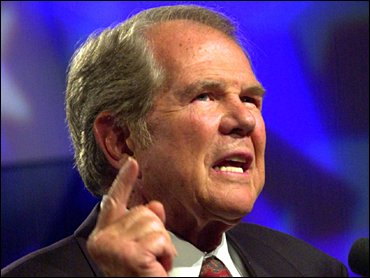
Pat Robertson makes me a better believer …

God told Pat Robertson who the next President of the United States will be.
You can watch it at Slate or read about in million other places.

Here is the thing: as much as people may want to make fun of the guy for being delusional I have to think that there may be something to be said for him.

If anyone follows my blogs either here or at Homebrewed Christianity then you know that I am a big proponent updating the faith. In fact, truth be told, I have written about it more than any other subject over the last 4 years.

I am especially interested in 3 updating things:

  • The way we read the Bible (hermeneutics)
  • The way we conceptualize the universe (cosmology)
  • The way we talk about miracles (metaphysics)

I have even gone so far lately as to publicly articulate why the miraculous is not super-natural and to research church history about eschatology (the end)… I have even shown concern about the evangelical icon Tebow [here].  All of that is to  say that I am not dabbling in this or being halfhearted… nor I am doing what so many that I know are and simply walking away from a faith that is not intellectually credible, scientifically accountable, or personally tenable. Continue reading “Pat Robertson makes me a better believer …”

Blog at WordPress.com.

Up ↑