Search

Bo Sanders: Public Theology

updating & innovating for today

Women: Images & Identity

Last week I read a fantastic post by Julie Clawson. I wrote a post asking her some questions. She responded and so did Carol Howard Merritt.  Then Rachel Held Evans gave it ‘Conversation of the Week’ in the coveted Sunday Superlatives!   These 3 women great authors and speakers. I feel privilege to have them as dialogue partners! Here are some highlights:

Background: I love going to the movies. As a student, I usually only go the theatre on Summer break (blockbuster action films + air-conditioning = awesome) and on Winter break (tired brain + Christmas money = fantastic).

Last week I saw two movies and was quite intrigued by a pattern that I noticed during the trailers: women being tough guys. The three trailers were for Underworld: Awakening with Kate Beckinsdale, Haywire with Gina Carano (both action films) and The Iron Lady with Meryl Streep playing Margaret Thatcher.

I have read enough feminist literature to know that there is a principle (which Thatcher made famous) that “In a man’s world …” a women often has to out ‘man’ the guys in order to break into the boys club and be taken seriously.

In a system where we have been socially conditioned to see certain behaviors and attributes as ‘leadership’ or ‘strength’ – or in the church as ‘anointing’ – then women must over-do it in order to overcome the intrinsic biases and gain credibility in a system geared to evaluate by masculine expectations. (people point to Joyce Meyer as a Christian example)

This is a real problem.

THEN I was reading your blog this week and you bring up the Lego Ads making their way around Facebook and tie it into both modesty and obesity. As a youth pastor I have read everything from Reviving Ophelia to Queen Bees and Wannabes ,that explains why girls treat each other the way that they do, and I recognize that there are deep underlying issues. Let’s be honest, these deep issues will not be solved by quoting some Bible verses or ‘going back to the way things were in the Bible’.

So here are my questions: 

1. What do we do with the karate-chopping drop-kicking gun-shooting heroines of violence on the silver screen these days? On one hand, it is nice to women getting these big-deal leading roles in major films… on the other hand, are they real portrayals of women-ness or is it the bad kind of mimicry –  like ‘Girls Gone Wild’ as a picture of sexual liberation or power.


2. Are there any resources that you can point me to for Image and Identity? Your blog post on the Lego issue is really sticking with me.

3. As a youth pastor, how would you suggest I navigate the (rapidly) developing sexuality without repression while steering clear of moral permissiveness?  Any thoughts?

Julie Clawson:  Bo brings up some really good questions to which there are no easy cut and dry answers. I ranted/blogged about this general topic a few years ago, but the issues still exist, and perhaps are even intensified. On one hand, I would start by pointing out that just because a woman is an action hero, tough as nails, or possess traditional leadership qualities doesn’t mean she is acting like a man. That could simply be just who she is and she should be given space to be herself without being judged. But at the same time, I agree that it is a widespread cultural issue that women often feel like they must put on the persona of men in order to succeed. Our culture doesn’t know how to handle women who are strong, intelligent, and assertive.  Continue reading “Women: Images & Identity”
the 99 and the Tebow: success, Billy Graham and Canada

I blog both here at at Homebrewed Christianity. Sometimes after a post rotates off the front page over then I re-post it here for ongoing conversation.

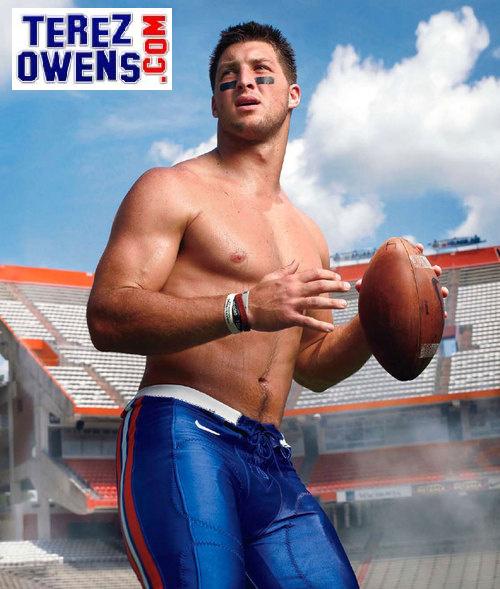
Several weeks ago I had fun looking at the difference between Tim Tebow’s* faith and what his zealous (mostly evangelical & charismatic) fans do with it. I took some flack from asserting that Jesus was not intervening to help him win close games.
Since then he has lost 3 games. The choir has gone shockingly quiet. It appears – and this may come as a surprise – that Americans worship success more than any ‘god’. In fact, one might wonder if success is America’s god.

It always piques my imagination when politicians say ‘May God bless America” at the end of their speeches … I try to pay attention to how they say it and what they might be expecting that blessing to look like.

 There are two elements to this that really attract my attention:

  • Part of the reason this sticks out to me so sharply is that I have dual-citizenship with Canada. I went to High school and started Bible College there. When I see Tebow bowed on the sideline praying in the 4th quarter, I smile as I think of the completely different religious and political atmosphere in Canada. Almost every Canadian I know – even the believers – I can hear saying “Easy big guy, don’t make too much of a display”.

American zeal is a phenomenon. I have a theory that it is actually embedded in the DNA of this country courtesy of those original Calvinists who brought with them the concept of “signs of divine benevolence”. This little mechanism says
‘while we can’t know who is elect unto salvation or damnation – certainly we say that a good tree will bear good fruit. So, while no can know for sure if they are “in” certainly God graces the chosen with “signs of divine benevolence”. Continue reading “the 99 and the Tebow: success, Billy Graham and Canada”

Cut it out with the whole ‘Curse’ business

My posts on Tim Tebow and Pat Robertson were so well received I thought I would  comment on one more incident this week.

You may have heard that another football player made non-sports headlines this week when he admitted that he now believes in curses.  You can read the story of Payton Hillis here.  You see, it is believed whichever player makes the cover of the Madden Football Video game each year can expect trouble in the season that follows and may see his career take a turn for the worse.
There is a similar curse for the magazine Sports Illustrated cover. I have seen that pattern happen over and over in past years.

I want to suggest here that we leave behind the idea of curses and all that associated hokus-pokus.

Before I do that – let me clarify two things:

  • You can curse somebody by saying hurtful things about them. Words effect both the speaker and the the hearer. Not guarding one’s tongue can be a curse.
  • You can curse someone by gossiping about them and crippling their chances with other people.

If we want to use ‘curse’ in a symbolic-poetic way … that would be one thing. But if we think that it has a literal correspondence to actual (ontological) reality then:
What I am saying is that this idea of somebody being cursed or being under a curse is so medieval, antiquated, and superstitious that it is somewhere between folk-religion and hogwash.

Now you may be asking yourself “Why does he get so upset about this stuff? Why does he even care? Why does he bother taking this on? Why not just let it go?”

It turns out that there is a really good explanation!

  1. I have been told that I had a curse.
  2. I regularly have to council people pastorally who have been told that they are under a curse.

It is hurtful and superstitious and I want to shout “How do you think that universe works? Really!”   Do you think that I could be plagued today because somebody who I may or may not know said something into the air that I may or may not be present for and it limits my life?” I have spent hours & hours late into the night praying to break curses – trying to discern in prayer who & where the curse came through in order to overturn its power at the origin.

Over the past 20 years I have been told so many times by people who are into Spiritual Warfare and Intercessory Prayer that “witches go through the phonebook and pray against pastors by name and put curses on churches” as an explanation for everything from pastoral adultery to drops in attendance.  Continue reading “Cut it out with the whole ‘Curse’ business”

trying to making sense of the miraculous

This is a re-post from a blog that I did at Homebrewed Christianity. I wanted to display here in preparation for a series of upcoming posts.  [ I have started putting posts with big words over there and more everyday stuff over here – it seems to be working]  Thank you all for your great feedback and thoughts!

In his book Process Theology: a basic introduction , C. Robert Mesle says:

“the miracle of birth” is a wise phrase, pointing us toward a healthy theology of miracles. Birth is not supernatural. It involves no intervention violating natural processes. We know a tremendous amount about reproduction and may one day be able to create life in laboratories. Yet for all that, we still feel, and speak of, the miracle of birth…
Miracles become problems when we think of them as demonstrating divine power to intervene in the world however God wishes. The problems are not merely scientific, but also theological and moral. Nothing challenges the goodness of God or the justice of the universe more than the stark randomness of such alleged “miracles”.

That is an interesting way to think about the subject, but I want to make an important distinction between supernatural and miraculous.  The Miraculous can be seen several ways – as something that surprises us, outside our expectations; as something that is amazing; like the miracle of birth, something that is statistically improbable , like landing a Airplane on the Hudson River; or religiously as something that only divine help could account for.

There are several reasons why I think that this topic is SO important:
I can not tell you how often someone says something about how God directed them to take a specific road or a route that avoided an accident.

  • Did god tell everyone and they just were not listening?
  • Did god only tell those whom love god?
  • Does god monitor all traffic patters and why would god be so concerned with getting you  home on time but so unconcerned with children being abused and people going hungry?

People often get defensive and say “In a worship service I saw/experienced  _____. Are you trying to tell me that did not happen?”  No. I absolutely believe you that it happened. What I am saying is that maybe the explanation provided in the worship service was not the whole story of why the phenomenon happened (people being slain in the spirit, etc).
I want to be clear about something: I believe in prophetic words. I have told people things that I could not have known in my own power – including twice that I have described pictures that hang in their homes, homes that I had never been to.
I absolutely believe that the Lord could ‘lead’ you to call someone who needs a call ‘at that exact moment”.

So keep that in mind when I say that we need to revisit our frameworks around the miraculous and we definitely need to abandon the whole ‘super’ natural worldview. It does not hold together under even the slightest examination in the 21st century. Continue reading “trying to making sense of the miraculous”

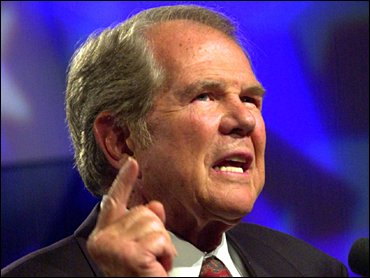
Pat Robertson makes me a better believer …

God told Pat Robertson who the next President of the United States will be.
You can watch it at Slate or read about in million other places.

Here is the thing: as much as people may want to make fun of the guy for being delusional I have to think that there may be something to be said for him.

If anyone follows my blogs either here or at Homebrewed Christianity then you know that I am a big proponent updating the faith. In fact, truth be told, I have written about it more than any other subject over the last 4 years.

I am especially interested in 3 updating things:

  • The way we read the Bible (hermeneutics)
  • The way we conceptualize the universe (cosmology)
  • The way we talk about miracles (metaphysics)

I have even gone so far lately as to publicly articulate why the miraculous is not super-natural and to research church history about eschatology (the end)… I have even shown concern about the evangelical icon Tebow [here].  All of that is to  say that I am not dabbling in this or being halfhearted… nor I am doing what so many that I know are and simply walking away from a faith that is not intellectually credible, scientifically accountable, or personally tenable. Continue reading “Pat Robertson makes me a better believer …”

Hurting at the Holidays

This really moved me to pray for and remember those who are sick and hurting during the Holiday Season.

The following is a note from a formerly famous quarterback. He won all the awards and played in the NFL. When it was over he went work for a ministry in New Orleans (Desire Street Ministries) that had to move to another city because of the hurricane.

Dear Friends,

“Life is tough.”

I remember hearing those words often growing up, especially from my father when things weren’t going my way. I hated those words as a kid…and I still do.

Something inside me resists any suggestion that life shouldn’t be comfortable. While my mind might accept the reality that life can be tough, my emotional reaction in the midst of difficulties Continue reading “Hurting at the Holidays”

Sorting through the ‘super’ natural

Mike Horn asked a great question on the Tim Tebow post this week:

I was hoping you could elaborate more on this … 1) What are the “interventionist assumptions behind a supernatural world view?; 2) the antiquated relics of a pre-modern understanding, which are untenable in the 21st century? I read the “pentecost for progressives” summary but didn’t see anything that really explained questions (1) and (2). Does my belief in the supernatural make me a “pre-modern” in my thinking? “Post-modern emergents” don’t believe in praying for the sick? What does “untenable in the 21st Century” mean? I was hoping you could elaborate further. I love the conversation. Thanks!

A couple things as we begin:
a diagnostic question: If you have the following formula anywhere in your faith “If its good – its God, if its bad then you don’t have enough faith … unless you do, then its the devil.”  then I am talking to you.
OR
if you think that God talks to your heart and are comfortable talking about demons and spirits and the enemy, then I am talking to you.
OR
If you think that world works the exact same way as it is described in the Bible ie. Gender roles and that science proves that a man can live the belly of fish for 3 days, then I am talking you.

Now, to your question:

The assumptions behind a supernaturalist worldview can be framed in a 3-tiered view of the universe. God is up (in the heavens) and this transcendent God is so good and so pure that ‘He’ can have nothing to do with our sin and fallen dirtiness.  NOW – we quickly run into two problems:

  • How was Jesus fully God and fully man? Traditional Answer: it is a mystery.
  • How does God answer prayers and work in the world?  that is the problem

The way around the problem (if you insist that God is only transcendent) is a mechanism called intervention – what I call interference. Continue reading “Sorting through the ‘super’ natural”

Talking about Tebow’s God

This is a repost from Homebrewed Christianity. There was a wild discussion that ensued. I thought I would bring it over here as well – in case anyone wanted to have quieter conversation.

I have held off as long as I could but I think we better talk about this now before it goes any further.

Tim Tebow is a phenomenon is the media these days. His Denver Broncos football team is on a 6 game winning streak and he is 7-1 as their starting Quaterback. Despite his apparent limitations (skills) he has orchestrated a series of amazing comebacks during the winning streak.  That is a big deal! Any fan would love to have their team on this kind of a roller coaster – come from behind – frenzy.

That, however, is not what makes this news. Continue reading “Talking about Tebow’s God”

Winter Break Reading

I have 35 days from this Monday (when I turn in my last paper) and when school restarts in January.  I’m going to try and engage these 17 books – some of which I have read before and some of which are new to me.

No Rising Tide by Rieger (Economics & Theology)
Discovering an Evangelical Heritage by Dayton
Revisioning Evangelical Theology by Grenz
The Process Perspective by Cob
Process Theology by Cobb
Revelation Commentary by Farmer
Liberation Theology by Boff
a Theology of Liberation by Gutierrez
Engaging Theology by Bracken
Deglobalization by Bello
Globalization and its Discontents by Stiglitz
Sexism and God-talk by Ruether
God is not One by Prothero (Religion)
Emergence by Johnson (Science)
The Second Naivete by Wallace (Biblical Interpretation)
The 10,000 year explosion by Chochran and Harpending (Science)
To Each Its Own Meaning by McKenzie and Haynes (Biblical Interpretation)
also the upcoming book by my mentor and friend Randy Woodley entitled “Shalom in the Community of Creation”.

Some science, some Bible, some religion, some global issues and a whole lot of theology.  Should a be a fun month and it will get me ready for the next semester!

What is on your reading list?


Blog at WordPress.com.

Up ↑