>There are going to be some changes for me and Everyday Theology in 2011. I am now in a PhD program and I have been trying to get a job. I have been able to get a couple of small part-time jobs for January-February, two of which will affect me publicly and privately.
My two gigs are with Religion Online [link] and Big Tent Christianity [link]. I am very excited about both, the first will impact me long-term, the second will be big in the short-term.
Here are the three changes to Everyday Theology in 2011:
- Everyday Theology will continue to be a weekly Podcast about the everyday implications of what we believe as Christians in the 21st century. I will put up the transcript every week where comments and questions can be posted. I love this conversation!
- I have several other projects which I will manage through my other Facebook account. You can participate with those other projects at Lead From the Fringe (my ‘quick thoughts’ blog) and Ethic Space and Faith (where I am an ‘Admin’ and sometimes author).
- In a PhD program, your time is spent a little differently than as a full time minister. My thought life and book selection are different and the expectation of how I interact with the material is consequently changing. I will need to adjust the content of the podcast a little bit in order to take advantage of the reading that I am already doing and also to practice the discipline of engaging current and historical authors and thinkers.
Some of you may know but, a couple of years ago I left a church that I loved very much and I did not know what going to Seminary would mean or how I would be able to bridge the gap with my new direction. It went better than expected and Everyday Theology has been a wonderful conversation to help me think through what it looks like to have a progressive christian faith in the real world.
The final thing I want to say is that I faced a big decision in the past months. I have taken great effort (and pride) in not being reactive, argumentative or inflammatory. I read a book almost a decade ago that impacted me radically. The book was called The Argument Culture and the author, Deborah Tannen, got to the very root of this damnable way that we conduct ourself in the west (especially North America including Canada).
Perhaps the biggest change for 2011 is the change that I have decided to pass up. I decided that I just don’t want to contribute to the argument culture and I certainly don’t want to be one of those christians who attack and criticize other christians (as much as I can possibly help it). So here is a story about why that decision has been so difficult.
______
I exist mostly in a progressive (not a capital P) christian context. That is what I would say is my community. Most of us have ‘emerged’ (not capital E) from a predominately evangelical-protestant- with charismatic leanings type heritage.
In my circles I have always assumed and heard that when public characters like Jerry Falwell sounded off on Hurricane Katrina being a punishment from God for the people of New Orleans – that most people rolled their eyes and knew that he was such a marginal expression that he should not be taken seriously.
or when Franklin Graham said that Islam (as if it were one thing) is a terrible religion filled with hate – that people knew he was not a spokesman for Christians (as if we are just one thing).
or when Mark Driscoll says that he could never worship a Jesus that he could beat up – that it carried about as much weight as a WWF wrestler mouthing off to get pumped up before a match, pulsing with vibrato and testosterone.
But apparently that is not the case.
Moving can be a powerful experience to encounter new perspectives. I recently moved A) regions of the country B) from a Masters program to a PhD program and C) from a school with ‘Evangelical’ in it’s name to a school that is widely known for being wildly liberal.
The weird part is that I have never heard more about hell. Honestly, it comes up several times a week in a variety of conversations and settings. There seems to be a collective obsession with who is going to hell and who gets to say who goes to hell. I have heard more about hell in the last 6 months than the last 6 years combined. It’s almost as if there is a collective trauma that has happened by so many people telling so many other types of people that they are going to hell. The people that I hang out with take great offense at being told that they are going to hell by our more conservative brethren.
SO here is the moment when I got some clarity:
In our readings for a class, the names Jerry Falwell, Franklin Graham, and Pat Roberson came up as the 3 examples of American Protestants . Two weeks before this class I was at a huge event at the LA Country Library for a global conversation between two nationally known authors – and these same three names came up.
It caused me to stop and think, “Wait – I thought that everyone knew that there were alway those marginal voices in any group – that there are clowns at every circus…” but they are not spokesman for the cause. They don’t speak for me and my circles.
So when our class presenter referenced this part of the reading (a mention that was noticeable because it was not the central focus of the reading) I perked up. The presenter said that they are a public face of Christianity – that when people who are not Christians think of Christianity , that is who they think of.
If this were true, I would have to change my approach.
I assumed that when people say Pat Robertson – Jerry Falwell – Franklin Graham they thought “affluent white male christian TV personalities”. I didn’t think that they thought “all Christians”.
When a group like the Gospel Coalition forms with people from that exact same demographic (only this time with a Calvinist bent) – I thought that people just saw a bunch of dogmatic guys from Reformed backgrounds… I am starting to reconsider that.
Lest you think that I am I being too optimistic or that I am being too naive… I have an agenda – I am trying to figure out if the Big Tent vision of Christianity is big enough to include those who think that there is a very small tent that they are not only IN, but are in charge of .
I have been giving everyone the benefit of the doubt that they knew that there is not just one type of Jewish (Orthodox, Conservative, Reformed, etc.) – that there is not just one type of Christian – that there is not just one type of Muslim – that there is not just one type of Atheist… that the world is very nuanced! Does everything just get boiled down to a soundbite?
At that point, I was thinking that maybe I need to become more aggressive and more confrontational. Now I think that we already have too much of that and have decided to just stick with this M.O. and be who I feel called to be. I can not be responsible for the big picture or determine the outcome. All I can do is play the role I am suppose to play and bring my best to the table.
I hope that you have a wonderful NewYear and I am looking forward to the ongoing conversation in 2011.

 Bo Sanders: Public Theology
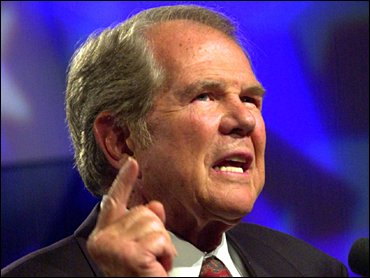
The Next Pat Robertson Gaff
With the election season over, the frequency, intensity and insanity of conservative white men making outlandish statements will hopefully die down … I’m moving a bunch of blogs over there this week and found this cheeky little blog I wrote in the middle of the fire-storm.
Pat Robertson topped even himself in the category of ‘insulting-inflammatory- stupid comments while the tape is running’ this morning. That may seem difficult with all of the previous entries that have earned him elite status in the gaff Olympics.
The most recent entry was in response to a question from a man who apparently wanted to know what to do with his non-submissive wife. Robertson started with suggesting that the man could convert to Islam … and as tough as it might be to top that one, he did. After conceding that the Bible does not allow for him to divorce her, Robertson gave him the option to move to Saudi Arabia – thereby indicting not only an entire religion but an entire nation.
I know that many will want to jump on Robertson with disdain and scorn but … maybe we should not be so quick to jump to judgement. As often happens in cases like this, there is a good possibility that there is something we don’t know behind the scenes. There might be more to the story that at first meets the eye.
Now, before you dismiss this outright – just keep in mind that many preachers and politicians who rail against homosexuality later turn out to have been involved in illicit same-sex affairs at the very time they were railing. This pattern can be seen in leaders of many self-righteous and sanctimonious movements.
With public figures, we just don’t know. So I am suggesting that we might want to hold off judgement. Sure, right now it looks like crazy Uncle Pat has come unglued and betrayed the very gospel that he is supposed to be a minister of and a spokesman for. But … let’s just give it time.
That is plan A.
If you can’t wait for that, there is a plan B. As I proposed a while ago, it is possible that words for fundamentalist christians are like dialogue in porn movies. They play an important role in allowing us to suspend our suspicion and get down to the real business at hand.
I said that the real activities were nationalism, capitalism and militarism. One of our deaconesses added patriarchy. This accusation would stick to Robertson’s many gaffs like a field of burrs on a cheap pair of cotton dockers.
Here is the thing: I want to be a generous and gracious purveyor irenic ecumenism. But there are times when you hear something like this and realize how many people are genuinely injured by this stuff. Like it or not – he is a spokesman for our religion, my tradition and Jesus’ name. This is why I go so far out of my way to say that we need to stop waiting for Superman and start sticking up for causes that don’t directly impact us.
Here is a conversation that I have had repeatedly in the past 20 years.
People don’t like when I am critical, negative, dismissive or adversarial. Neither do I. All I am saying is that I am very nervous about what gets broadcast on christian radio and TV these days and the impact that it has on thousands and thousands of people.
So here is the question: If, and I am only asking ‘if’, there was a machine that was fueled by a different vision of the world and different priority structure than that fleeting Galilean vision – but it was covered with a thin veneer of Jesus talk as a mask for the true agenda … shouldn’t we say something at some point?
If the Jesus-paint was only a mask on a monster, or a series of brushstrokes on a Hollywood set facade … we should say something right?
That probably is why plan B in this case is not so popular.
THE most important thing in all of this is that we are very clear about people who have simply bought into a bad brand of christianity and those who are up to something with it. It is one thing to have merely inherited a flawed-limited-unaware religious product and those who openly promote a product that injures people and harms those who need what Christ provides the most. We have to be careful. This stuff is wicked, acidic, and cancerous. We can’t paint with a broad brush or be dismissive of folks who are just walking the same road we are all walking together – trying to figure it out.
May God give us grace in the journey. We need it. Lots of it.